
Tony Medeiros is a Montreal-based blogger with over 20 years of experience covering pop culture and the culinary scene. Known for his engaging reviews and unique insights, he has built a trusted voice for readers seeking informed and entertaining perspectives on food and entertainment. @sandboxworld @tonymedeiros
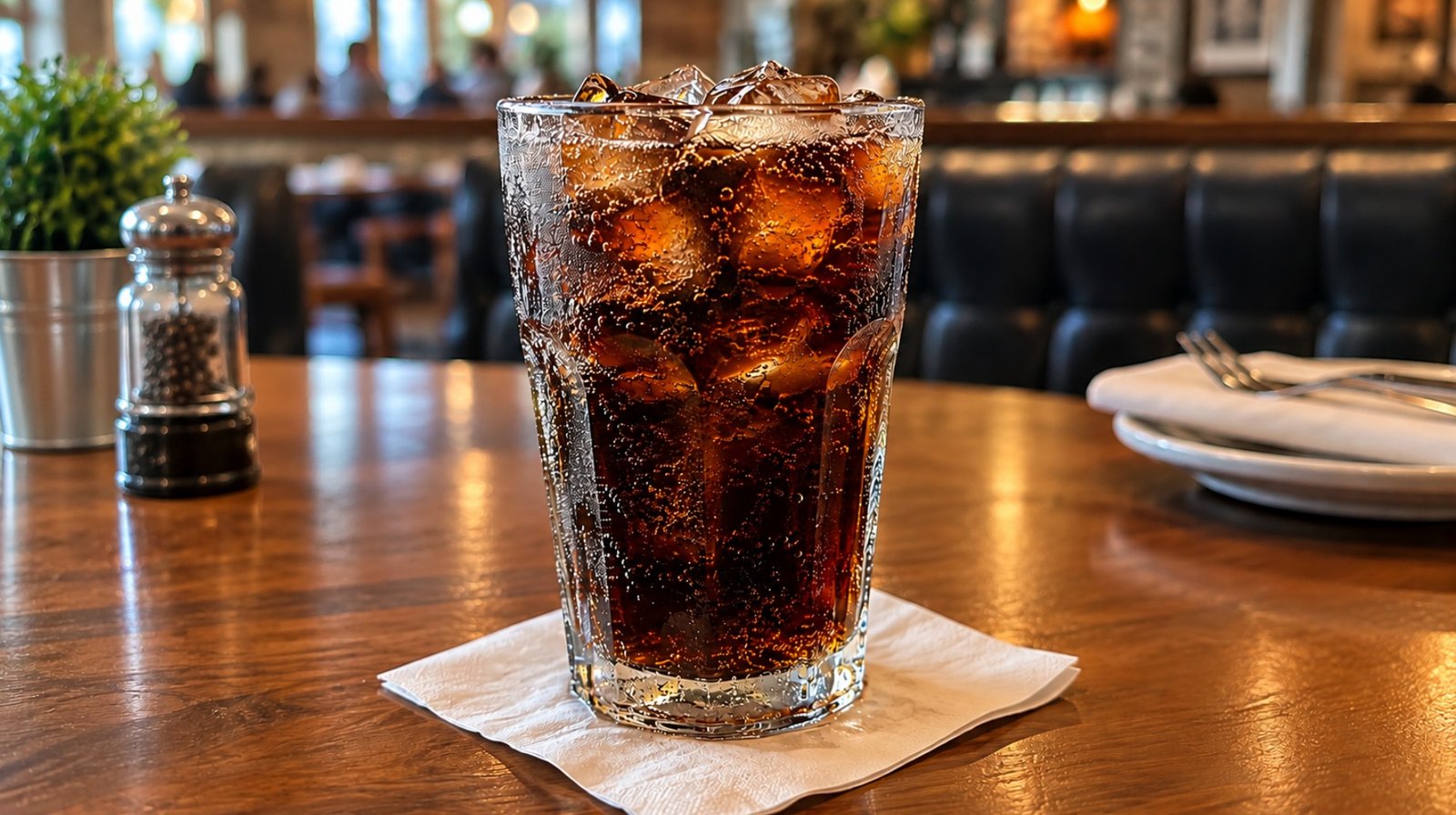
You sit down, order a burger and ask for a Coke. A few minutes later, a glass arrives packed with ice, and the bill shows four bucks for a soft drink. I look at that and think, really? Four dollars for a Coke? The more I started looking into it, the more I realized there is a pretty interesting little business hiding inside that glass.
For starters, that Coke probably didn’t come out of a can. Restaurants with fountain systems use concentrate and carbonated water to make the drink, which is very different from buying a 355 mL can and putting it in front of you. The system also includes the cup, lid, straw, ice, water, carbonation, and all the equipment needed to keep it working properly. Anyone who has received a fountain Coke that tastes too sweet, too weak, or completely flat knows that getting it right isn’t as simple as pushing a button.
Then there is the cup itself. A 20-ounce cup doesn’t necessarily mean you’re drinking 20 ounces of Coke because some of that space is ice. That’s not necessarily a restaurant trick, but it is worth remembering that the size of the cup and the amount of soda in it are two different things. The fountain system, the amount of ice and the way the drink is poured all affect what actually ends up in your glass.
This is where the restaurant business gets interesting. McDonald’s CEO Chris Kempczinski has acknowledged the economics of beverages, saying, “You can actually get a lot of full margin products from these beverage offerings.” There is a reason the big chains are paying so much attention to drinks. They are relatively simple to serve compared with many kitchen items, and beverages are becoming a bigger part of the restaurant business.
McDonald’s itself is now putting beverages front and centre in Canada. In May 2026, McDonald’s Canada introduced a permanent lineup of cold drinks including Crafted Sodas, Refreshers and Cloud Iced Coffees, while describing beverages as a core part of how the company serves customers.
But here’s where I don’t want to start throwing around those crazy internet numbers about restaurants making 500, 600 or 800 per cent on a Coke. Unless we know what a particular restaurant actually pays for its syrup, cups, CO2, water, equipment, maintenance and everything else involved, we’re guessing. I would rather get the real numbers from a Montreal restaurant and do the math properly.
Then McDonald’s did something that really caught my attention. The company announced plans to eliminate self-serve beverage stations from its U.S. restaurants, with the transition expected to be completed by 2032. McDonald’s has said the move is about creating a more consistent experience for customers and crew across different ordering channels. It has not said that cost or sanitation is the reason.
Think about what that means. For years, you got your cup and walked over to the machine. You decided how much ice you wanted, filled the cup yourself and, depending on the restaurant, could go back for another drink. Now the beverage moves back behind the counter and the restaurant controls the pour.
I’m not saying McDonald’s is doing this to squeeze another few cents out of your Coke. We don’t have the evidence to say that. But I do think it raises a bigger question: are restaurants slowly taking back some of the control they handed to us?
We’ve spent years moving in the other direction with kiosks, apps, mobile ordering, delivery and self-service. Now some of the big chains are looking very closely at the beverage business, while also trying to make the restaurant experience more consistent. McDonald’s even tested CosMc’s, a beverage-led concept built around specialty drinks and coffee, before bringing some of those ideas into its regular business.
At the same time, Canadian customers are changing what they order. Restaurants Canada, using Ipsos Foodservice Monitor data, reported that carbonated soft drinks accounted for 19.6 per cent of beverage orders in 2024, down from 21.4 per cent in 2023, and identified carbonated soft drinks as one of the fastest-declining menu categories over the 2021-2024 period.
So the humble restaurant Coke is sitting in an interesting place. The restaurant wants the economics to work, the customer wants value, the big chains want new reasons to sell beverages and nobody wants the dining experience to become completely automated. Somewhere in the middle sits a plastic cup full of ice.
And let’s not forget that the $4 isn’t paying only for the liquid. Someone has to serve it, the glass has to be washed, the fountain equipment has to be maintained, and the restaurant still has rent, wages, insurance, utilities and credit-card fees. A good margin on a beverage doesn’t mean the owner walks away with the difference in their pocket.
Still, I can’t help looking at that four-dollar Coke and wondering what we’re really paying for. How much of that $4 is actually the Coke? That’s the number I want to know.
I’d love to get a Montreal restaurant to open the books on one fountain drink. What does the syrup actually cost? What about the cup, ice, CO2 and everything else? How much does the restaurant charge, and what is left after the real cost of putting that drink on your table?
Then we can stop guessing.
And if McDonald’s is taking the soda machine out of our hands, I want to know something else: are other parts of the restaurant industry going to follow? Are we going to see less self-service and more of the dining experience handled behind the counter, or is this simply McDonald’s adapting to the way people eat today?
I don’t know yet, and that’s exactly why I think it’s worth asking. Because sometimes the most interesting restaurant story isn’t what’s on the plate. It’s what’s hiding in the glass.