
Tony Medeiros is a Montreal-based blogger with over 20 years of experience covering pop culture and the culinary scene. Known for his engaging reviews and unique insights, he has built a trusted voice for readers seeking informed and entertaining perspectives on food and entertainment. @sandboxworld @tonymedeiros @goodinothers
When I was young, the food court was a place to get a quick bite. There was nothing fancy about it, and it wasn’t exactly the place you wanted to hang around. You picked something from one of the counters, found a table, ate your lunch and got back to shopping. It was convenient, it was usually pretty quick, and that was about it. I certainly don’t remember anyone saying, “Let’s go to the mall because I really feel like spending some time in the food court.”
That has changed quite a bit. Walk into some of the newer or renovated food spaces today and you can find restaurants, cafés, bakeries, better seating, terraces and enough choice to make deciding what to eat almost as complicated as deciding what to buy. More importantly, the spaces themselves are becoming places where people actually want to spend time.
That got me thinking about why this is happening now and what it means for the future of shopping centres. Because the food court may have become a lot more important than most of us realize.
The mall has a problem
Think about how we shop today. When I was younger, if you wanted clothes, electronics, books or just about anything else, you went to a store. Today, you can sit at home with your phone and have almost anything delivered to your front door, so shopping centres have to give us a reason to get off the couch and come to them.
Food is a pretty good answer to that problem. You can order dinner from your phone, but you can’t completely replace meeting a friend for lunch, taking the family out, grabbing a coffee or discovering something while you’re already out. If the shopping centre can get you through the doors for food, there is a pretty good chance you’ll walk past a few stores while you’re there.
I saw a good example of this when I visited Square One in Mississauga and its Food District. I went there expecting a shopping-centre food court, but instead found a collection of restaurants, bakeries, cafés and other food businesses that made the food itself something worth exploring. The Food District brings together more than 25 eateries, and what struck me was that I didn’t feel like I was simply looking for somewhere to eat before heading back to the stores. I wanted to walk around and see what else was there. That was a very different feeling from the food courts I remember growing up with. I wrote about that visit in Worth Your Salt: The Food District, Best Food in Mississauga.
The malls are looking for restaurants too
There is another part of this that I find even more interesting because it changes who is doing the chasing. During one of my many restaurant reviews, a restaurant owner told me that a local shopping centre had approached him about bringing his restaurant concept into the mall. He wasn’t simply looking for a space and hoping the landlord would say yes. The shopping centre wanted his restaurant.
That stuck with me because a restaurant owner has a very different situation when opening on the street. You have to create your own traffic, get people to notice you, convince them to come through the door and then give them enough reason to come back. A shopping-centre location comes with something that is very difficult and expensive to create on your own: people already walking past the front door.
Of course, being in a mall doesn’t guarantee anything. The restaurant still has to be good, the rent still has to make sense and there may be plenty of competition just a few steps away. But from an operator’s point of view, I can understand why being actively recruited by a shopping centre would be interesting. You have your own place and have to build your traffic, or you can put your restaurant inside a place where thousands of people are already coming every day.
That also tells us something about the malls themselves. If they are actively looking for restaurant concepts, they aren’t simply trying to fill empty units anymore. They are thinking about which restaurants will bring people into the building and what kind of food experience they want shoppers to have once they get there.
Promenades St-Bruno is putting serious money behind it
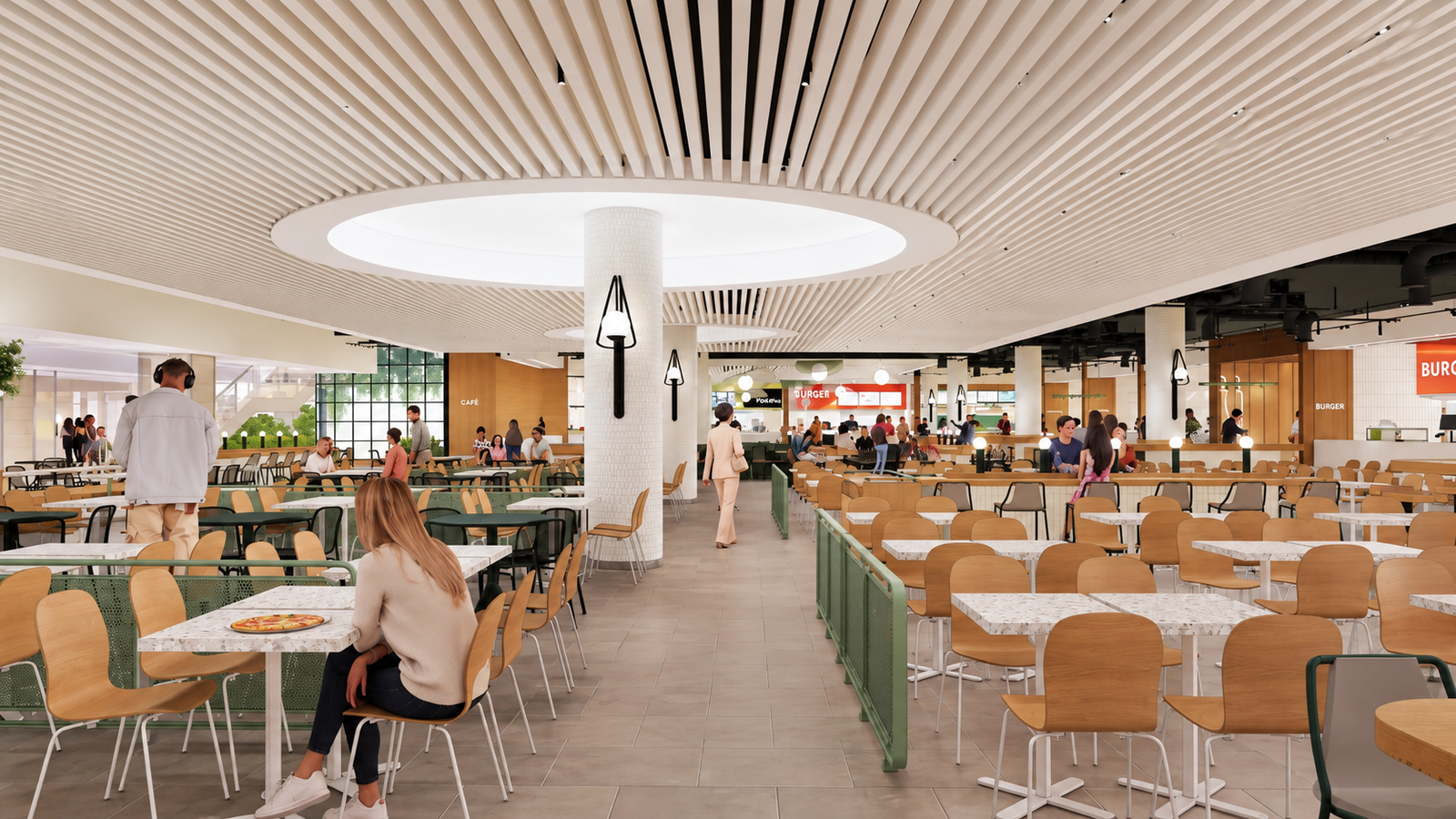
You don’t have to look very far to see how seriously this is being taken. Promenades St-Bruno announced a $49.5-million redevelopment that will relocate its food court and roughly double the seating capacity to about 1,100 seats. The project will include an outdoor terrace and a dedicated exterior entrance designed to support extended hours, takeout and delivery. Construction is scheduled to begin in September 2026, with the new food court expected to open in fall 2027.
What really caught my attention is what happens to the existing food-court space. The new food court will move into the current Marché des Promenades area, while the former food-court space is eventually expected to become retail space. So this isn’t simply a case of putting in nicer tables and repainting the walls. The shopping centre is moving the food operation, expanding it and then finding another use for the space it leaves behind.
We obviously can’t say yet whether the project will be successful because the new food court hasn’t opened. What we can say is that the owner has decided the food experience is important enough to justify spending $49.5 million on it. That’s a pretty big statement about where food sits in the plans for a modern shopping centre.
Montreal is already changing the idea
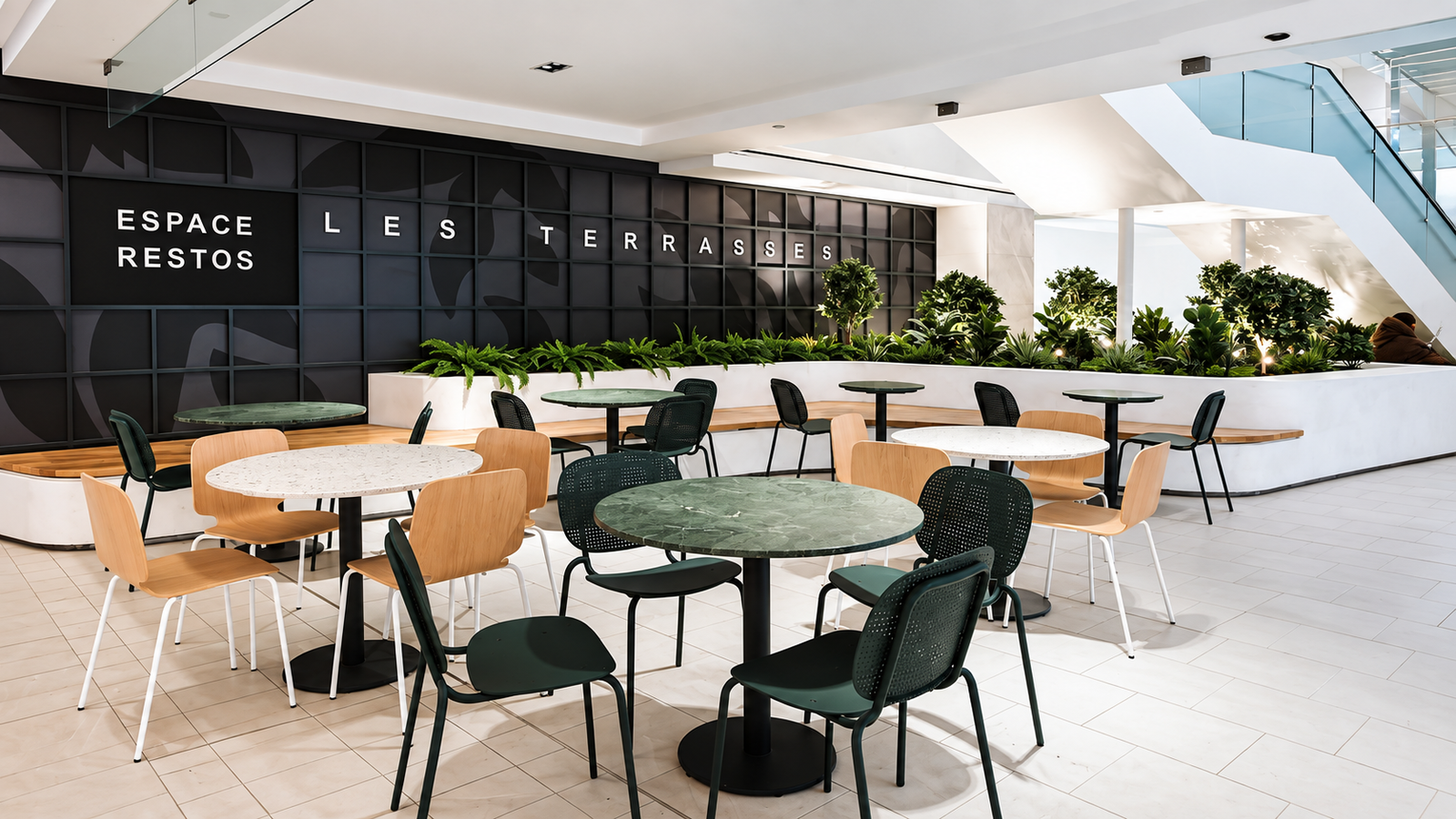
Centre Eaton de Montréal gives us another good example. Its new Les Terrasses – Espace Restos offers 12 food counters, with the first seven already open and a second phase of four additional operators scheduled for fall 2026. The first group includes Thai Express, Subway, A&W, Poke Monstre, Jugo Juice, Bento Sushi and Edo Japan, with Hurry Curry, Basha, Shanghai 360 and Grillades Torino coming in the second phase.
There is something else interesting about Centre Eaton because the building already has Time Out Market Montréal. You therefore have two very different versions of the modern food experience under the same roof. Les Terrasses is closer to the traditional food-court model, although it has been redesigned around a more modern environment and a variety of choices, while Time Out Market takes the food-hall approach with restaurants, chefs, bars and communal seating.
That change in language tells us something too. We used to call these places food courts. Now we hear food hall, dining destination and food experience, and while some of that is certainly marketing, the spaces themselves really are changing. The idea is no longer simply to give hungry shoppers somewhere to sit for twenty minutes. The food is becoming part of the reason to spend time in the building.
Look at Le Cathcart at Place Ville Marie, where restaurants, cafés, food counters, communal seating, a biergarten and an indoor garden have created a destination in the Underground City. At Royalmount, Le Fou Fou takes the idea even further, with 12 culinary offerings, three bars, a 6,000-square-foot outdoor terrace and seating for more than 900 people. These are very different places from the food court I remember as a kid.
Maybe choice is the real attraction
There is another reason these places make sense. Nobody has to agree on what they want to eat, which can be a pretty big deal when you’re trying to feed a family or a group of friends. One person can have sushi, someone else can get a burger, another can order ramen and somebody else can settle for coffee and dessert, while everyone can still sit together.
It also makes trying something different easier. If you see something you’ve never eaten before in a food hall or modern food court, you don’t necessarily have to make a whole evening out of it. You’re already there, so why not give it a try? That kind of casual discovery is part of what made the Square One Food District interesting to me.
The old food court had choice too, but most of that choice was about convenience. The newer versions are trying to make that choice part of the experience, and then give you a comfortable place to sit while you figure out what you want next.
This is about more than nicer chairs
This is where I think the business side becomes interesting. Shopping centres are enormous properties, and every part of that property has a purpose. When an owner starts moving food courts, adding terraces, expanding seating and actively recruiting restaurants, there is clearly more going on than simply giving shoppers somewhere to eat.
Bring people in for food, give them a place where they want to stay, offer enough variety that different people can find something they like, and then let the rest of the shopping centre benefit from that traffic. Someone might come for lunch and end up shopping, meeting a friend for coffee, going to a movie or simply spending another hour walking around.
That matters because shopping centres are competing with much more than other shopping centres. They are competing with online shopping, neighbourhood restaurants, cafés, entertainment and the very easy option of staying home.
Food gives them something that is difficult to duplicate online. We still like going somewhere to eat.
But are these projects actually working?
This is where I would slow down before declaring victory. It is easy to look at the money being invested in food courts and food halls and conclude that the shopping centre has found the answer to all its problems, but we don’t know that yet.
Promenades St-Bruno’s new food court won’t open until 2027, and Centre Eaton is still in the process of completing the next phase of Les Terrasses. These projects are evidence that food has become important to shopping-centre operators, but they aren’t proof yet that every new food concept will succeed.
The interesting numbers will come later. Are people still coming after the novelty wears off? Are the restaurants making enough money to stay? Do people spend more time in the shopping centre because of the food? Does someone come for lunch and then end up doing something else while they are there?
Those are the questions I would be asking, because a beautiful food court is one thing. A food court that becomes part of people’s routine is something else entirely.
Five Quebec shopping centres worth watching
I’m not calling these the five best food courts in Quebec because that isn’t really the point. I would rather look at five shopping centres that show different pieces of this change and see what happens next.
CF Carrefour Laval represents the big suburban shopping-centre model, where food has to work alongside a huge retail operation and give people another reason to stay. It is a massive property, and its restaurant offering is already an important part of the overall experience.
Centre Eaton de Montréal is particularly interesting because Les Terrasses now sits alongside Time Out Market Montréal, giving downtown visitors two very different versions of the modern food experience in the same building.
Promenades St-Bruno is the one I would be watching closely because the big experiment is still ahead of us. A $49.5-million investment, approximately 1,100 seats, an outdoor terrace and a dedicated exterior entrance is a pretty substantial bet on what food can do for a shopping centre.
Galeries de la Capitale in Quebec City is another example of shopping, food and entertainment becoming part of the same outing. With restaurants and major entertainment attractions already built into the property, it shows how the shopping-centre visit can become much bigger than simply going from store to store.
Royalmount takes the experience even further. Le Fou Fou combines 12 culinary offerings, three bars, a large outdoor terrace and more than 900 seats, making food a major part of the destination rather than something you do because you’ve been shopping for three hours.
I don’t think the food court is going away
I don’t think the old food court is disappearing completely, and I’m actually glad about that. There will always be a place for the quick and affordable meal when you’re shopping with the kids, rushing between appointments or simply don’t want to spend an hour having lunch.
What has changed is what we expect from the experience. The food court doesn’t have to be the place you tolerate because you’re already at the mall. It can have good food, comfortable seating, interesting choices and enough atmosphere that you don’t mind staying for a while.
When I think back to the food courts I knew growing up, the difference is pretty funny. The food court existed to serve the shopping centre. You went there because you were hungry, ate your food and went back to the stores.
Now the relationship is starting to work both ways. The shopping centre needs food to help give people a reason to come, stay and come back, while restaurant operators get something that can be very difficult to create on their own: a steady stream of potential customers walking through the door.
After seeing what happened at Square One and looking at what is being built here in Quebec, I think the old food court has become something much more interesting. It isn’t simply the place where you grab something to eat while you’re shopping anymore. For some shopping centres, the food is becoming part of the reason you came in the first place.